Guide 18 · Risk and consequence
Crime, court and prison
A crime is a risky choice that can lead to evidence, a fine, a court case, public attention or time in prison.
Know this first
Crime can fail
Evidence follows the choice
Prison remains playable
Choosing a crime
Crime choices can appear on The Streets or through a story on Now. Open the choice and read the possible gain, known risks, time and any restriction before confirming. Violence is never shown explicitly.
The game then decides what happened using the character's situation and the evidence created by the attempt. The exact chances stay hidden so crime remains a risk rather than a puzzle solved by a calculator. Refreshing the page cannot create a safer answer.
A crime may bring money or another advantage, but failure can create fines, confiscated goods, damaged reputation, a court case or custody. Even a successful attempt can leave evidence for later.
Evidence connects the act to a case
Evidence is information linking the character to the act. More or stronger evidence can make a charge more likely and changes how the court sees a contested case.
The result names what happened without revealing private safety details or a formula for avoiding detection. If a charge follows, Now and The Court show the response deadline.
Protections limit repeated attacks on the same person and other forms of harassment. A crime button being unavailable may therefore be a safety limit, not a broken page.
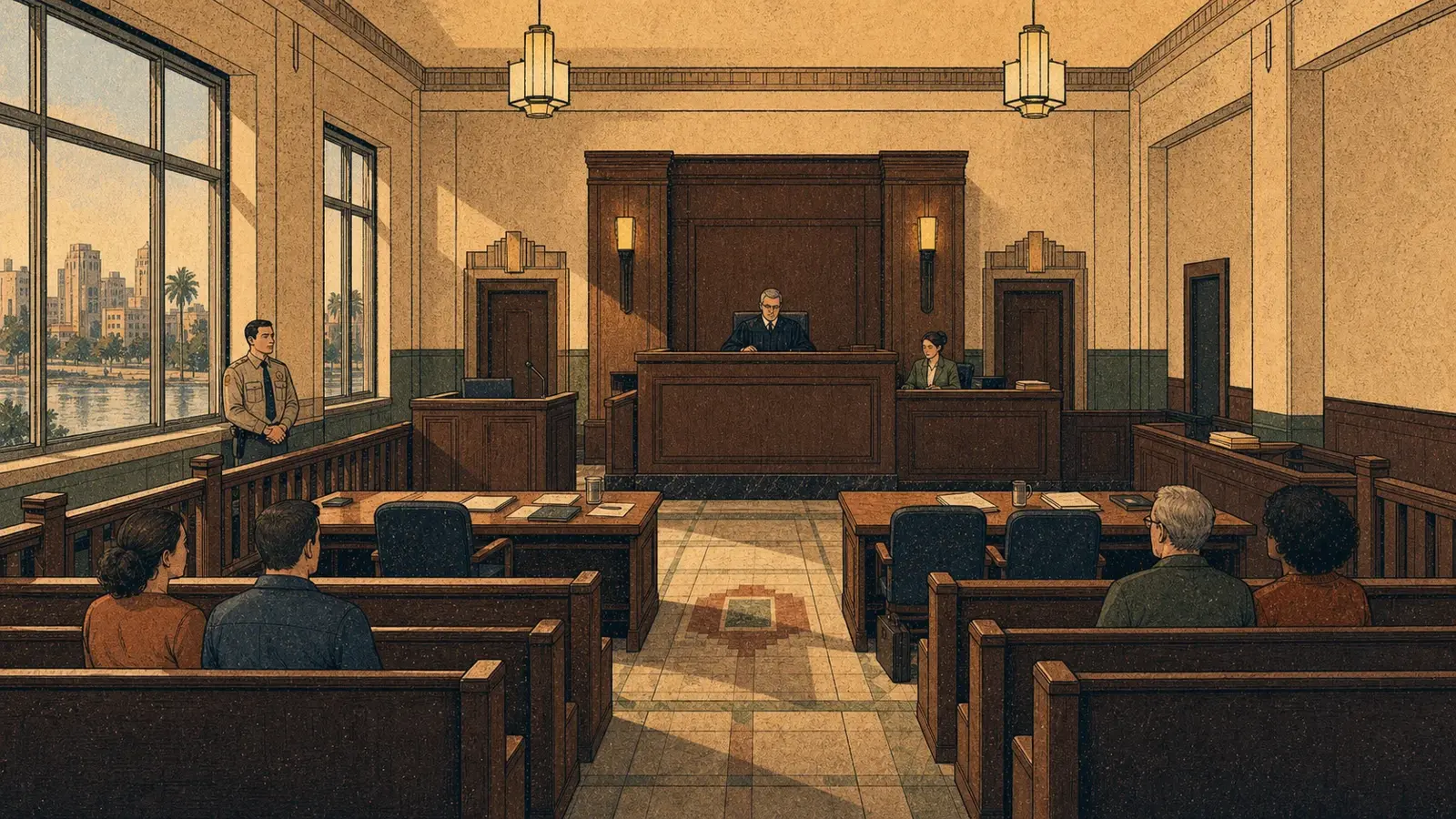
The court decides the outcome
Choose Your Life, open Institutions, then The Court, or follow the court card on Now. A charge is not yet a sentence. The page places the nearest response deadline first and explains what each choice closes.
Accepting the charge resolves the case on the listed terms. Contesting asks the court to weigh the evidence and any legal help. Waiting past the deadline lets the court continue without the response you could have made.
- 1
Read the charge
Understand what the character is accused of and which evidence is being used.
- 2
Prepare the case
Choose whether to accept the charge or contest it. Legal help has a displayed fee and can strengthen a contested case.
- 3
Read the decision
The result explains the fine, custody or acquittal and any public consequence.
Prison is still part of the game
A sentence can describe months in the character's record while custody uses a separate real release time. Choose Your Life, open Institutions, then Jail when your character is inside. The game frame shows the expected release time.
Custody does not remove every choice. Prison work has a limited daily wage, study can build useful progress, the commissary is the small prison shop and visits let people maintain contact. Food and rest remain available.
Later behaviour can affect parole, which is release under conditions before the full sentence record ends. Read the parole page for its requirements rather than assuming time alone guarantees approval.
After the case
Fines appear in your money records, custody changes where your character can act and a public case can affect how other residents see them. Read the final decision and follow each named consequence rather than closing the result immediately.
Release returns the character to ordinary city life, but it does not erase the charge, relationships or missed responsibilities. Work, study, legal careers, repair with other people and a different public story are all possible next directions.