Guide 13 · Understanding your money
Money, banking and the market
Learn where your money came from, what took it away and how work, rent, food, shops and banking fit together.
Know this first
Every payment has a clear reason
Your bank statement explains changes
Work first, then protect food and rent
Where money comes from
Your balance can grow through wages, odd jobs, projects, business sales and some public rewards. Money is shown as dollars with the familiar $ sign.
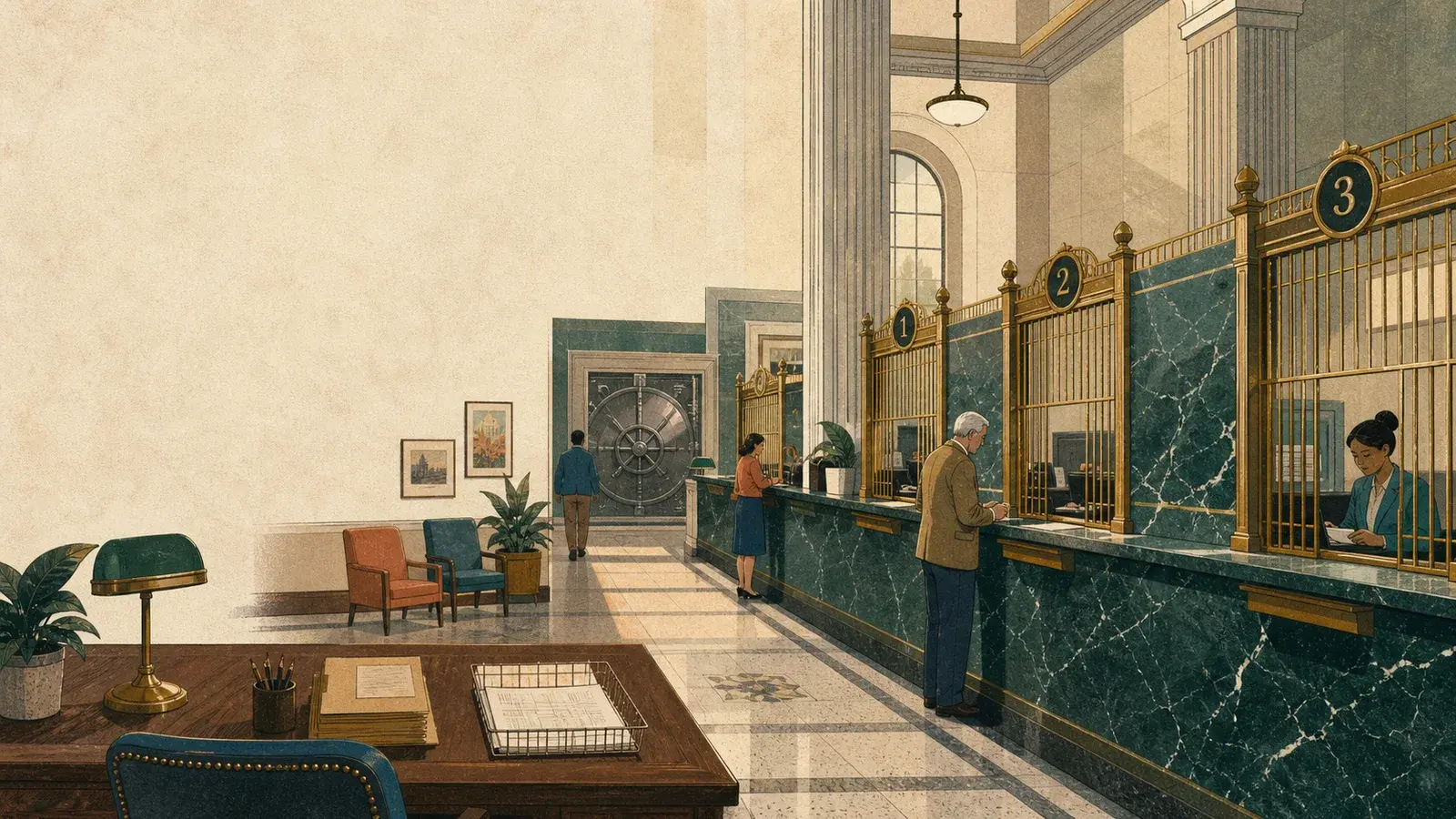
Before most adult money choices, your character needs a City ID, bank account and debit card. Open your Pocket, choose Wallet and follow any unfinished set-up direction. The Registry handles identity and Northbridge Bank handles banking.
Each payment keeps a plain record of the amount, the other side and the reason. That means a balance should never change without a matching line you can read on the bank statement.
Where money goes
Some costs happen immediately when you confirm them. Others arrive on a schedule, such as rent, or after an outcome, such as a hospital bill or fine. Check Diary and Now for approaching costs.
A shop price is only the purchase price. Ask what the item is for before spending: food may solve hunger and business stock may create future sales. Decoration and entertainment are valid choices too, but protect essentials first.
- Rent keeps your home.
- Food and useful items support everyday life.
- Treatment, study and services solve larger needs.
- Fees, taxes and fines follow choices made in the city.
- Business stock and staff are costs before a sale becomes profit.
Read your bank statement
Choose Your Life, open Money & Property, then Northbridge Bank and Statement. Wallet in your Pocket is the quick balance view; the statement is the place to investigate a change.
A card payment for work that will happen later may first reserve part of your money. Reserved means you cannot spend that amount elsewhere while the booking is open, even though the seller has not received it yet. It is later completed, returned or allowed to expire.
- 1
Find the change
Look for the amount and whether it entered or left your account.
- 2
Read the reason
The description names the shift, purchase, rent payment, transfer or city action involved.
- 3
Follow the place
Recognisable pictures and names help connect the payment to the part of the city where it happened.
Protect rent and essential bills
Home shows the next rent concern, while Solano Post can carry bills and a Pay button. Read the amount and reason before paying. A current bill replaces older reminders for the same unpaid amount, so do not pay every old-looking message separately.
If rent is missed, it becomes unpaid rent rather than pushing your balance below zero. The home page states the current arrears and the point at which the lease is at risk. Protected housing keeps the character playable if a lease ends.
A simple first budget
Keep enough for food and the next rent payment before spending on status, entertainment or business growth. You do not need to save every dollar, but you should know which future cost you are accepting.
Treat the example as a habit, not a rule that every character must follow. A risky spender can be fun to play, but the game should still show the consequence clearly enough for that risk to be a choice.
If your balance is low
Your balance stops at $0 rather than falling into a hidden negative number. Look for a shift or odd job, delay a non-essential purchase, check Your Things for food you already own and confirm whether a bill has already been paid.
Northbridge Bank can offer an overdraft or personal loan when your banking history qualifies. An overdraft lets an approved payment use a limited amount beyond the cash currently available; a loan gives money now and creates scheduled repayments plus a fee. Read the total cost and next repayment before accepting either.
Borrowing directly from another player is not allowed. Do not arrange an unofficial loan through gifts, fake shop sales or promises outside the game; those routes do not receive loan protections.